INSIDE
- Articles
- Movie Reviews
- Thought for the Day
- Today's News
- Bookmarks
- Fisher House Publishers
- Fisher House Online
- About Living Better


More time
More control
More flexibility
More financial freedom
Moms Make More at Home

|
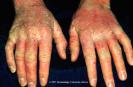
By Laura Friederich The tickle of an itch, as light and invisible as the wind, comes with unmatched superior and overpowering strength. There really is nothing like scratching that itch; clichés are based of the realization of the importance of getting that hard to reach place – “If you scratch my back, I’ll scratch yours.” Imagine an incurable itch – one that rarely leaves and always returns. This cringe-causing scenario is a reality for 6% of all Americans. And 10% of Americans are estimated as affected by the 15 million people in the U.S. that suffer from the skin condition known as eczema. What is Eczema? In its most severe and chronic form, eczema is known as atopic dermatitis. Causing itchy, inflamed skin, this condition is often identified in early childhood or even infancy. Inflammation and irritation usually occur behind the knees and elbows, but flare-ups can occur all over the body. Erin Reynolds, a 21-year-old college student who has suffered from eczema her entire life, says she usually experiences flare-ups on her hands and arms. Eczema is not contagious, but is passed down genetically. A child with one parent suffering from an atopic disease has a one in four chance of having the disease as well. Those suffering from eczema usually experience dry, cracked skin, or flare-ups of small, inflamed bumps on the skin. Other conditions that eczema-sufferers have a lifelong tendency to have according to the National Eczema Association include:
What causes a flare-up? The key to controlling eczema is to control and avoid flare-ups. Thus it is extremely important to know what causes them. Even if you do not suffer from eczema, you may know someone who does, and being aware of things you can do to help prevent another’s discomfort is entirely necessary. Erin Reynolds commented on her living environment and the importance of those around her: “I am very thankful to live where I do and with the roommates I have. None of them are smokers (my flare-ups are easily triggered by the irritation of smoke), and they’re really encouraging and helpful when it comes to treatment. A lot of the time, I don’t want to go to the effort to apply the cortisone treatment, but my friends constantly remind me of how much it aids in my comfort level.” As Erin mentioned, there are many trigger factors that set off eczema and prompt skin irritation. Many of these factors include:
How can eczema be treated? While prevention of flare-ups is the best method for eczema treatment, it is indeed hard to control surrounding factors and the inevitability of flare-ups. Bathing and wet compresses can often be used to control the itch and cortisone creams are often used to suppress itching (though cortisone shots are unhealthy when used frequently for an extended period of time). UV light and sunlamps are also employed by physicians to treat this skin condition, along with tar baths, antihistamines, and antibiotics. The National Eczema Association offers a list of treatment and prevention options: Establish a skin care routine. Following the physician’s instructions is crucial for keeping AD under control. This takes a lot of time and effort. Some sufferers may resent the effort or even deny that their skin needs special care. Resentment and denial are natural reactions to any disease. Failure to overcome these reactions, however, can lead to additional behavior that is harmful to the skin, such as wearing fabrics that irritate the skin or missing skin treatments. Establish a schedule and a regular daily routine. Include skin care along with all other activities of daily living such as brushing and flossing teeth or washing dinner dishes. It is important to maintain a flexible attitude, so that when the dermatitis flares and extra skin care is needed, it can be worked into the routine. Look for skin care products that have natural ingredients that promote healing. Recognize stressful situations and events. To cope with the stress in your life, you must first notice when and how often stressful situations arise. These include day-to-day hassles as well as major events such as a job change, money problems, legal difficulties, family illness, etc. Ask yourself, "How do I react to stress? How does my body feel when I am stressed?" Learn stress management techniques. Certain approaches to reducing stress can be done on your own, such as setting priorities and organizing your time. Some activities that may reduce stress are regular aerobic exercise, hobbies, and meditation. Other approaches may require expert assistance such as a brief consultation with a psychologist. Be aware of scratching. Keep a record in a diary or calendar of times and situations when scratching is worst, and then try to limit your exposure to such situations. Many people with AD scratch the most during idle times. Engaging in a structured activity with other people or keeping busy with activities that involve the use of your hands may help prevent scratching. Control your environment. Avoid irritants and allergens. Avoid low humidity. Wear cotton clothing. Wash clothes in non-toxic detergents. Use natural soaps and detergents rather than those with harsh chemicals. Guard against infection. Moisturize. For more information about eczema contact: National Eczema Association for Science and Education 4460 Redwood Hwy., Ste. 16-D San Rafael, CA 94903-1953 415.499.3474 / 800.818.7546 Fax: 415.472.5345 http://www.nationaleczema.org info@nationaleczema.org References (August 1, 2005). National Eczema Association. Retrieved July 31, 2005, from http://www.nationaleczema.org Sponsored pages: Is you home a healthy home? http://livingbetter.momsmakemore.com/house/index.php |
